


LEARN MORE
You made it to the end of the exhibit! Whether hungry for more recipes or wanting to know more about a certain part of history, here is the place to learn more. Below are a handful of useful apps, influencers, and more to dive even farther into the world of foraging!
Foraging Apps


Foraging Experts




Foraging Podcasts

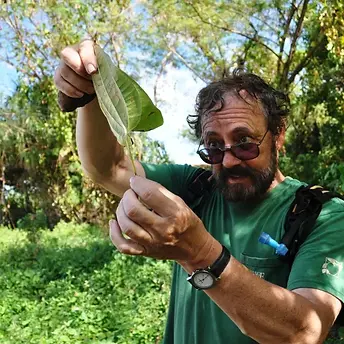
"A Low-Brow, Crass Approach to Plant Ecology & Evolution as muttered by a Misanthropic Chicago Italian. We study plants through the lens of ecology and evolution, rather than what supposed anthropocentric uses they can provide (as if holding up the biosphere wasn't enough)."

"A foraging podcast on untamed flavors found trailside, curbside, and low tide; where the best food is FREE. In this aural exploration, we will discuss wild plants with the people that eat them around the world. The goal is to learn, and share, but also lessen the stigma surrounding the wild edible plants and mushrooms that surround us."
Books about Foraging

by Robin Wall Kimmerer
As a botanist, Robin Wall Kimmerer has been trained to ask questions of nature with the tools of science. As a member of the Citizen Potawatomi Nation, she embraces the notion that plants and animals are our oldest teachers. In Braiding Sweetgrass, Kimmerer brings these two lenses of knowledge together to take us on “a journey that is every bit as mythic as it is scientific, as sacred as it is historical, as clever as it is wise” (Elizabeth Gilbert).
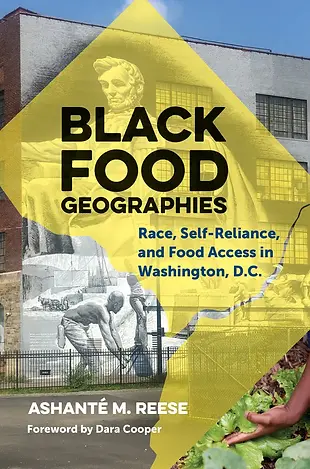
by Ashanté M. Reese
In this book, Reese makes clear the structural forces that determine food access in urban areas, highlighting Black residents’ navigation of and resistance to unequal food distribution systems. Linking these local food issues to the national problem of systemic racism, Reese examines the history of the majority-Black Deanwood neighborhood of Washington, D.C. Based on extensive ethnographic fieldwork, Reese not only documents racism and residential segregation in the nation’s capital but also tracks the ways transnational food corporations have shaped food availability. By connecting community members’ stories to the larger issues of racism and gentrification, Reese shows there are hundreds of Deanwoods across the country.

by Mark Dowie
How native people—from the Miwoks of Yosemite to the Maasai of eastern Africa—have been displaced from their lands in the name of conservation.