


Our Work
From lesson plans to community events, the Museum of Food and Culture offers a variety of programs customized to fit your school community, whether your goal is increased student engagement, hands-on experiential learning, or activating your alumni network. Start the conversation here!
See what's possible with the right program at your school!
Curriculum Support
Global Languages
Food History & Culture of Latin America
A ready-to-use lesson plan and facilitation guide designed to support third grade teachers in bringing global food cultures into the classroom. Using storytelling, visuals, interactive elements, this custom lesson highlighted how staple foods tell the story of the land, history, and identity. Dishes featured: empanadas, churrasco, and plantains.

Special Event
Ethics Day: Prison Labor in the Food System
What is on your plate? This interactive session engaged middle school students to consider the ethics of consumption. Starting with a multimedia perspective on prison labor in the food system, students learned about the history of mass incarceration in the United States. Students discussed and debated personal and societal ethics.

Service Learning
The Lunchbox Project
Building on the 7th grade focus on community and identity, this program invited students to explore food as a tool for storytelling. Students analyzed the importance of food in Everything Sad is Untrue by Daniel Nayeri, explored their own identity with food through creative writing and art, and amplified the voices of refugees to a wider audience through service learning.

Global Languages
Student Exhibit: Food Justice in Latin America
A research unit designed for advanced composition and conversation in Spanish. In small groups, senior high school students examined the political, societal and environmental impacts of cash crops in Latin America. Students learned to compile their findings into a compelling multimedia story and shared with Spanish I and II classes.

Social Studies
Desserts Research Project
What do we eat to celebrate? Students from Colorado State University's undergraduate hospitality program did sociological research on five desserts from around the globe (can you guess what they are?). From colonialism to agriculture, students learned how desserts share the stories of history, culture, and identity.

History
Colorado State University:
Grains Research Project
The foundation of civilization. Undergraduate college students explored the history, culture, and science of grains and grain cultivation. Students researched how and why grains have become staples of the human diet, and how they continue to shape society today.

Cultural Studies
Colorado State University:
Street Eats Research Project
What we eat (or don't eat) says a lot about who we are. Undergraduate hospitality students researched the social significance of convenience foods - from street food to gas stations - across the globe. Read more about the program here.

Science
Denver Urban Gardens:
Pre-K Produce Curriculum
Community gardens as the classroom. Support teachers use the garden and food to teach key concepts in STEM to preschool students.


"I loved our conversation, I felt it was educational and highly thought-provoking. Now I want to learn even more about the criminal justice system."
Middle School Student
Professional Development & Team-Building
Team-Building
Inclusive Ingredients: How to Stir Up Curriculum
An interactive team-building and professional development session. This session highlighted cross-cultural new year celebrations through hands-on cooking activities, reflection prompts, and educational materials designed to support faculty and staff to incorporate diversity and equity into their work.

Professional Development
Every Culture has a Dumpling (SBPS)
An experiential demonstration of how food can be a starting point for cross-cultural conversations about heritage, belonging, equity, and preference in the classroom. K-8 educators practiced activities and questions to spark student research, storytelling, and discovery.
.jpeg)
Professional Development
Food Education Fellowship: Student-Led Choices
In partnership with Pilot Light's Food Education Fellowship and Feeding Futures, the Museum of Food and Culture participated in a panel about how educators can support students to advocate for changes in the food systems they belong to, including local, national, and global.

Professional Development
Exploring the World with Food in the Classroom
This training helped educators at New York Association of Independent Schools craft hands-on and engaging curriculum using food. Attendees discovered how to address common concerns when using food in the classroom, encourage student-led research and storytelling, and engage local organizations and community members.

Team-Building
Mindfulness and Celebrating Cultural Heritage
With a focus on mindfulness, wellness, and self-care, this collaborative cooking workshop encouraged faculty and staff to consider the role of food in their own identity and culture while forging meaningful connections with one another.

Ani S., Partner
"Nothing but positive feedback from folks as they left and I was overfilled with gratitude by the end of the evening. Thank you!"
Maud S., Partner
"An excellent community builder and a terrific exercise in being present in the moment. MFC provided a wonderful communal experience."
Nick L., Participant
"Beautiful job of organizing and creating this experience. It was so fun to relax and laugh together. And it was great to try the different foods. Thank you! This was the most fun I had all semester!"
Community Events & Programming
Cultural Heritage Months & Holidays
Cooking through Cultural Heritage
Our flagship monthly K-12 newsletter program that uses food to explore culture, history, and community across a school. Each edition includes context, activities, and guidance designed for educators, students, and families. Schools choose how they engage, but approaches have included school-wide communications, partnerships with dining services, and activities in the classroom.

Holiday Event
Holiday Alumni Gathering
An annual festive event bringing alumni back to campus with their families to learn about and make holiday foods -- from gingerbread houses to pomanders. Parents and kiddos also crafted colorful dreidels and practiced their spinning technique to win piles of gelt!

Cultural Festival
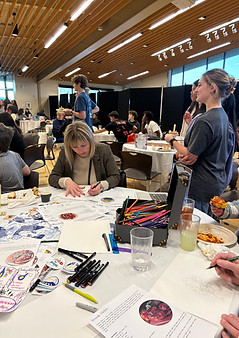
Recipe Illustration Workshop at Cultural Fest
How do recipes tell the story of us? At one school's annual cultural festival, we invited participants to deepen their experience of the global feast by creatively interpreting each recipe.
Pop-up Exhibit - Custom
Cooking for a Cause
Custom exhibit exploring the power of food and community in creating social change. From coffee shops to cookbooks — and even the school's own founding — food has long been a powerful way to spark social movements and create a more compassionate world. School community members gathered to uncover the extraordinary impact of ordinary people.

Pop-up Exhibit - Custom
Stirring the Pot: Women's Rights & Agency in the Kitchen
Throughout history, kitchens have been pivotal spaces for women to assert agency and wield power. This exhibit grappled with women’s evolving relationship with food and domestic work. From navigating the hardships of the Great Depression to advocating for health and homesteading after the COVID-19 pandemic, we celebrated the remarkable stories of women's resilience and empowerment in the kitchen for Women's History Month.

Pop-up Exhibit
Cocktails & Civil Rights Happy Hour
An interactive happy hour exhibit investigating the role of food in community organizing, particularly for historically marginalized groups. Faculty and staff explored about pivotal community spaces in American history - from the Stonewall Inn to rent parties during the Harlem Renaissance - culminating in tasty bite of history.
.jpg)